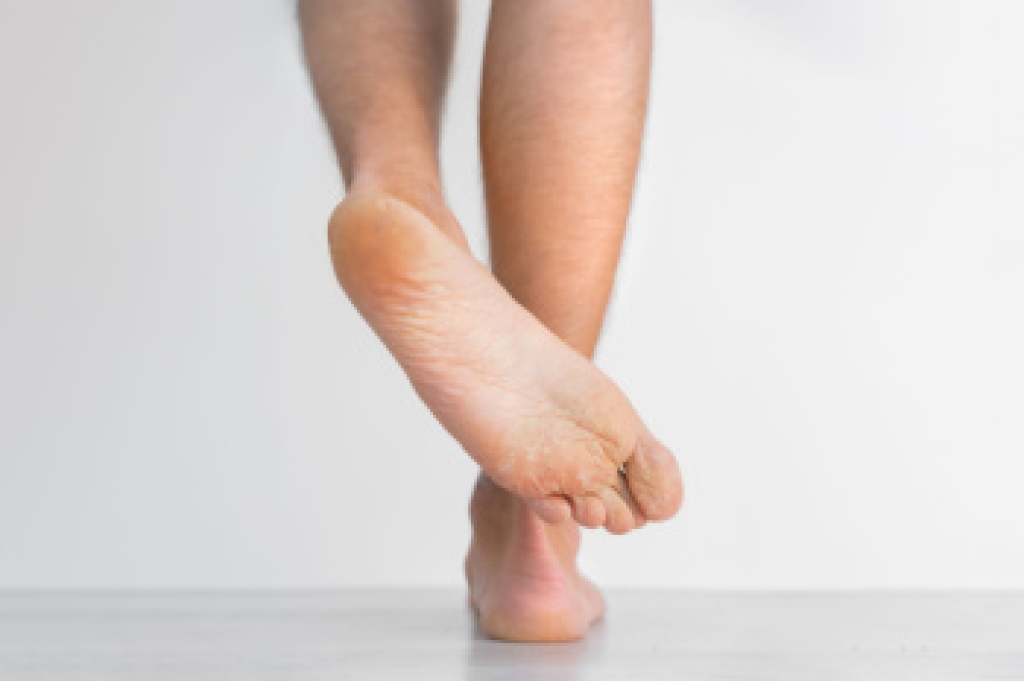
Athlete’s foot is a fungal skin infection that can make the feet itchy and uncomfortable. The medical name is tinea pedis, but athlete’s foot is easier to recognize. The fungus grows well in warm, damp places. Public showers, locker rooms, and areas around swimming pools can provide conditions where it spreads. People can pick up the fungus by walking barefoot on contaminated surfaces. Damp towels can also carry it. Sweaty feet can increase the risk because moisture creates an environment where fungus can grow.
Athlete’s foot can cause redness, flaking, and peeling skin. The skin can also crack or feel itchy, while some patients notice stinging or burning. Symptoms usually develop on the soles or between the toes. In some cases, the infection can affect the toenails. An infected nail can become thick, discolored, or brittle. Athlete’s foot can spread and become harder to treat when it is left untreated. Because other skin problems can resemble a fungal infection, getting an accurate diagnosis is important before treatment begins.
A podiatrist can examine the feet and determine whether the symptoms are consistent with athlete’s foot. Treatment can include antifungal medication that targets the fungus causing the infection. A podiatrist can also assess toenail changes and check whether the infection has spread to other areas. Professional care is especially useful when symptoms persist, return, or become more uncomfortable. A podiatrist can provide guidance on reducing moisture and limiting exposure to environments where the fungus can spread. This can help lower the chance of another infection after treatment and protect the skin from continued irritation or damage. If you have symptoms of athlete’s foot, it is suggested that you schedule an appointment with a podiatrist for diagnosis and treatment.
Athlete’s Foot
Athlete’s foot is often an uncomfortable condition to experience. Thankfully, podiatrists specialize in treating athlete’s foot and offer the best treatment options. If you have any questions about athlete’s foot, consult with one of our podiatrists from Community Foot Specialists. Our doctors will assess your condition and provide you with quality treatment.
What Is Athlete’s Foot?
Tinea pedis, more commonly known as athlete’s foot, is a non-serious and common fungal infection of the foot. Athlete’s foot is contagious and can be contracted by touching someone who has it or infected surfaces. The most common places contaminated by it are public showers, locker rooms, and swimming pools. Once contracted, it grows on feet that are left inside moist, dark, and warm shoes and socks.
Prevention
The most effective ways to prevent athlete’s foot include:
- Thoroughly washing and drying feet
- Avoid going barefoot in locker rooms and public showers
- Using shower shoes in public showers
- Wearing socks that allow the feet to breathe
- Changing socks and shoes frequently if you sweat a lot
Symptoms
Athlete’s foot initially occurs as a rash between the toes. However, if left undiagnosed, it can spread to the sides and bottom of the feet, toenails, and if touched by hand, the hands themselves. Symptoms include:
- Redness
- Burning
- Itching
- Scaly and peeling skin
Diagnosis and Treatment
Diagnosis is quick and easy. Skin samples will be taken and either viewed under a microscope or sent to a lab for testing. Sometimes, a podiatrist can diagnose it based on simply looking at it. Once confirmed, treatment options include oral and topical antifungal medications.
If you have any questions, please feel free to contact our offices located in Beavercreek, Dayton, and Vandalia, OH . We offer the newest diagnostic and treatment technologies for all your foot care needs.
